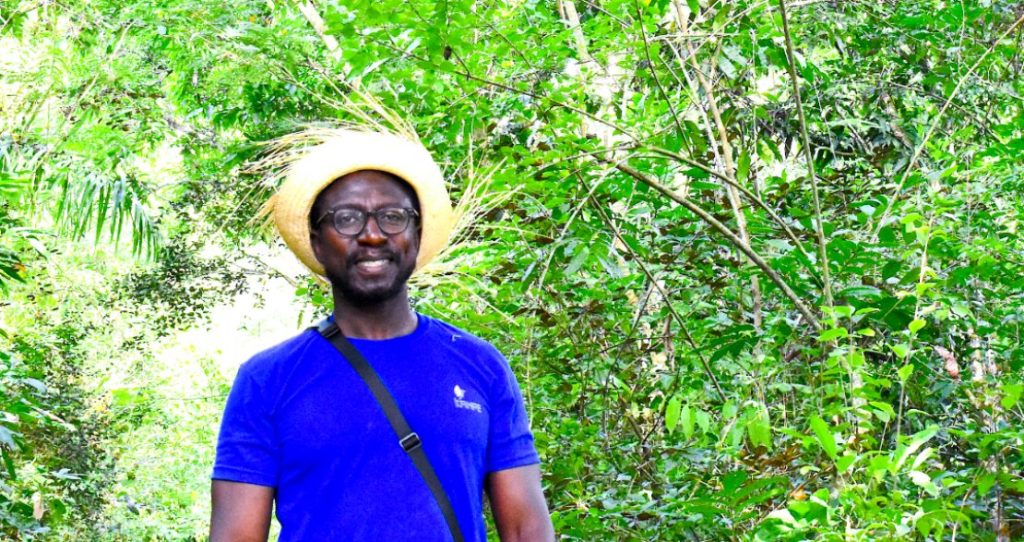
In the painting workshop at the 2026 Summer Camp, an instructor leans over a camper’s shoulder and gently corrects the way they are holding their brush. His name is Jacques. Eight years ago, he was the one holding the brush.
Jacques discovered the camp in 2018, as a camper. He learned to juggle, to make macramé, and he still holds one memory dear: the trip to the Saut-d’Eau waterfall. But what the camp really gave him, he says, were “long-lasting friendships with young people like me I would never have had the chance to meet otherwise.” Since then, painting has become his livelihood. So when he came back this year for his first experience as an instructor, the painting workshop was the natural place for him. The camper of 2018 is now training the campers of 2026.
And he isn’t the only one. Walk through the camp and you’ll meet three other instructors who, not so long ago, slept in the same dormitories as the young people they now teach.


There’s Gudleau, who can be found early in the morning leading the physical education sessions before disappearing behind the scenes into logistics with the organizing committee. He too learned to paint at the camp, in 2019 in Baille Tourible. That talent quite literally fed him: ” During my university years, painting is what put food on the table.” He finished those studies: business administration, with a specialization in accounting. Today, he is the documentation officer on our field team.
There’s Maestro Anderson, who was 17 at his first camp, in Thomonde, and who now leads the marching band and the music workshops at camp. Ask him what the camp gave him and he won’t stop: self-esteem, confidence, mutual respect, discipline, and “the chance to develop talents that were sleeping inside us.” Those talents are no longer sleeping. Maestro Anderson is now a professional musician, with training in entrepreneurship, building electrical work and solar panel installation.
And there’s Fabrice, whom the Baille Tourible marching band taught to play wind instruments and who now teaches them, in his first year as an instructor. A camper in 2018, he says the camp “brought a great change” to his life, and not only in music: he learned to make compost, discovered animal husbandry, and visited Kay Chavanne and Saut-d’Eau for the first time. Above all, he learned “to live with people from every walk of life, without discrimination, like brothers and sisters.” Now a teacher himself, he passes on that lesson as much as he passes on the music.
Four paths, one same trajectory: receive, grow, then give back.
That trajectory is no accident. It sits at the heart of what KANPE has been building for years through leadership development and support for local leaders. Because the goal of a summer camp has never been simply to fill the holidays: it is to make sure that knowledge is passed from one generation to the next. That communities strengthen their capacities and their skills, then pass them on themselves, to their own young people and to neighbouring communities. The day former campers become instructors, teachers and even staff members of the foundation, you know the cycle is turning. It is turning.
And somewhere among this year’s 73 campers, between a clumsy brushstroke and a first note on the trumpet, are surely the instructors of 2030.
KANPE means to stand up. It also means reaching back a hand to the one climbing up behind you.